 admin@bljiss.com.au
 07 3245 2203

Flogging Spanners
Product Description
BLJ In-Situ Solutions carry a large range of Flogging Spanners from 1-1/16″ all the way through to 5-3/4″
BLJ In-Situ Solutions carry a large range of Flogging Spanners from 1-1/16″ all the way through to 5-3/4″

BLJ In-situ Solutions has available for hire Hydraulic Hand Pumps used in conjunction with BLJ In-situ Solutions bolt tensioning tools and equipment, capable of 1500 bar (21,750 PSI) operating pressures. All tensioner equipment comes fitted with CEJN Quick connect fittings, using AW 46 oil, inspected regularly and calibrated to Australian Standards meeting all safety requirements.


Our high pressure, flexible hydraulic hoses are manufactured from multi-spiral reinforced ply steel with a clear PVC cover for additional operator protection and resistance against abrasion and corrosion, designed for use with all 1500 bar hydraulic tensioning tools and equipment, all fitted with Quick-connect couplings for fast and clean operation.
Large number of hoses available. All items are inspected regularly, meeting all safety requirements, 1500 bar working pressures & Minimum burst pressures of 3750 bar.


Each torque pump is contained in a roll cage with high flow filter, regulator, lubricator and is supplied with a dual non-conductive high pressure 15′ hose with quick-connect couplers and 12′ remote control. Pressure Torque Settings adjustable via a Relief Valve. Powerful 4HP industrial air motor runs on 50cfm/90PSI. Capable of pressures up to 10,000PSI. All Torquing equipment comes fitted with CEJN Quick connect fittings, using AW 46 oil, inspected regularly and calibrated to Australian Standards meeting all safety requirements.

BLJ In-situ Solutions has available for hire a large selection of Imperial & Metric Impact Sockets to suit all applications.
Covering 1/2″, 3/4″, 1″, 1-1/2″ & 2-1/2″ Square Drives in long and short series sockets with adaptors and extensions also available to suit any size square drive.


All nutsplitters are fitted with a single acting, spring return, hydraulic cylinder that requires only one hose to be connected to the pump unit (Hose & Pump available for hire). There are four cylinder sizes covering a large range of nut splitter heads. All hydraulic cylinders are rated at 20,000 psi (1400 bar) maximum working pressure. Nut Splitters and hoses are fitted with quick connect/disconnect self-sealing couplings. Head ranges from 3/4″ all the way through to 5-3/8″ depending on application.
Download Data Sheet ~ Nut Splitter


BLJ In-situ Solutions has available for hire a wide range of Hand Torque Wrenches in 3/4″, 1/2″ & 1″ Square drives (various adaptors available to suit any size Square Drive). With torque range from 100Nm all the way through to 1500Nm. All Hand Torque Wrench calibration is conducted by an external authority and the results are directly traceable to national standards.
Download Specs ~ Hand Torque Wrenches


An industrial tool available in a variety of mechanical and hydraulic spreading tools for the separation of stubborn joints for inspection, maintenance and decommissioning operations and allow the spreading of flanges with an access gap of 6 mm (0.24”) or greater. Stepped Blocks are to be used in a joint with a larger gap, and can be used to open a joint further with less penetration. Our Flange Spreaders are capable of spreading forces from 9.4T to 15.5T.
Mechanical Spreader Kits Include: 1 x Wedgehead, 2 x Stepped Blocks, 1 x Wrench with 22 mm Socket, 1 x Safety Block.
Hydraulic Spreader Kits Include: 1 x Wedgehead, 2 x Stepped Blocks, 1 x 10,000 psi (700 bar) Integral Hydraulic Pump/Cylinder, 1 x Safety Block, 1 x Carry-Strap
Download Specs ~ Flange Spreaders


Designed for installing and removing bolts having minimal wrench clearance requiring precise high torque during bolt makeup and maximum torque for bolt breakdown. Depending on your application, our selection of Hydraulic Torque Wrenches are available in a variety of Square Drives for use with any sized Socket as well as a large selection of attachable “Cassettes” from 1-7/16″ all the way through to 5-3/8″ and up to 38,000 Nm capacity. Used in conjuction with our Torque Pumps & hoses, also available for hire. All Hydraulic Torque Wrench calibration is conducted by an external authority and the results are directly traceable to national standards.
TX Hydraulic Torque Wrench Data Sheet
TU Hydraulic Torque Wrench Data Sheet
RSL Hydraulic Torque Wrench Data Sheet


We stock a variety of Nut Runners with up to 6,000 ft.lbs torque capacity. Various size Square Drives and Reaction Arms available to suit all applications.
All Nut Runners are non-impacting and unlike impact wrenches apply a smooth continuous torque eliminating destructive hammering and reducing operator strain and increasing productivity, some with the added advantage of an automatic two speed gearbox allowing for faster rundown. All pneumatic tools are supplied with reaction arm, 3M hose, Filter/Regulator/Lubricator in an easy to carry tool holder.
Available Nut Runners: 350SL, 550SL, 800SN, 10GX, 25GX, 34GX, 50DX & 60DX.

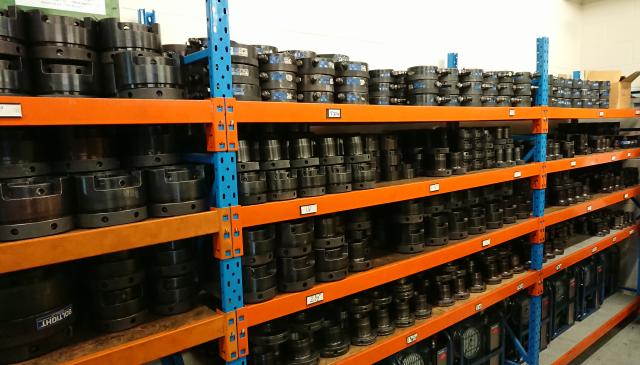
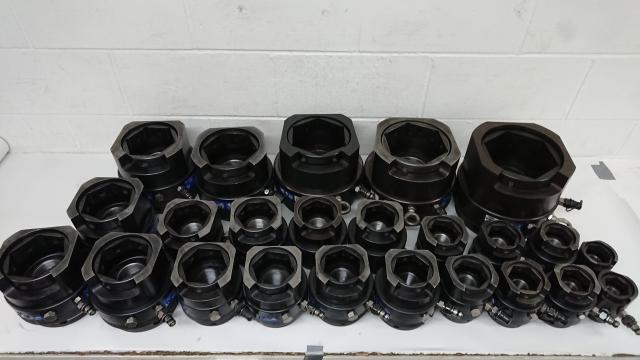
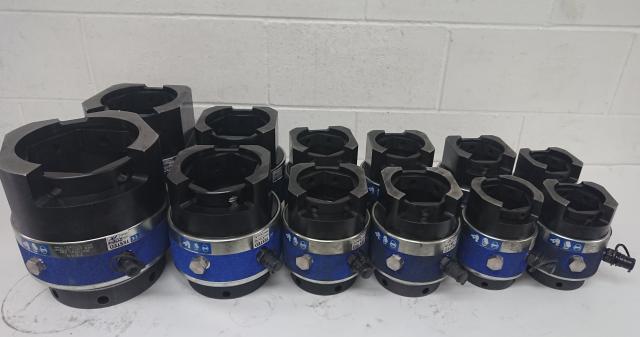
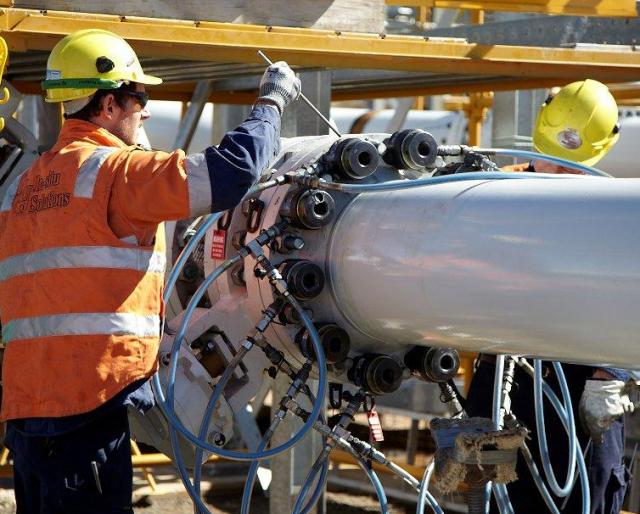
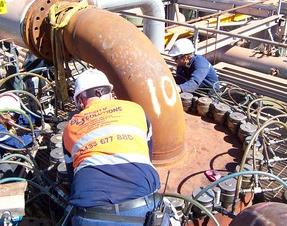
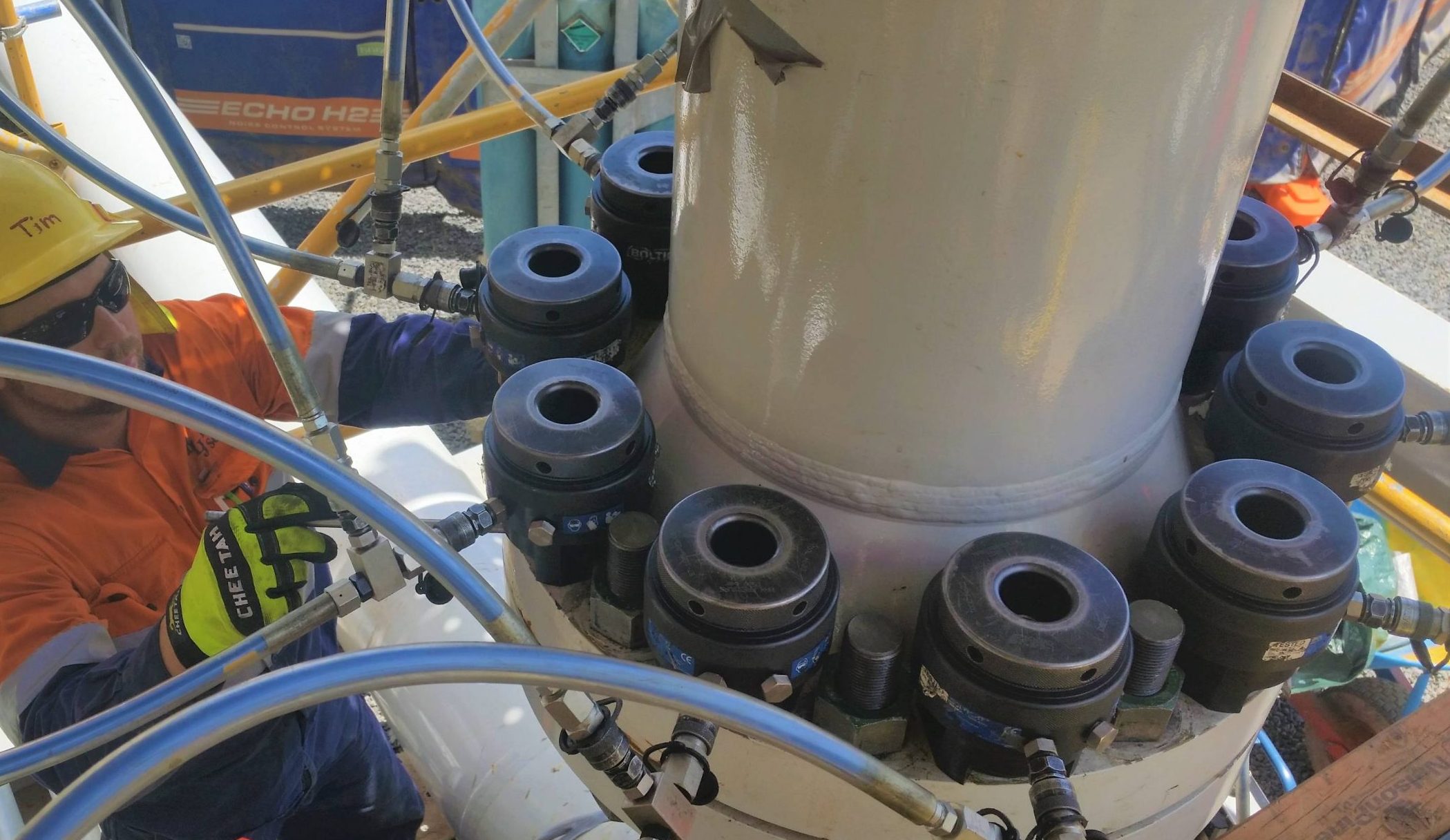
A bolt tensioner is a hydraulic tool that tightens a bolt by stretching it, rather than by turning the nut. The tool sits over the stud, hydraulic pressure pulls the bolt to a set load, the nut is run down while the bolt is held, and the load transfers into the joint when the pressure is released.
BLJ In-situ Solutions hires hydraulic bolt tensioners for bolts from 1 inch to 4 inch diameter, in a standard range and a TSR (spring return) range, all rated to 1500 bar. Every tool is fitted with CEJN quick connect fittings, and interchangeable adaptor kits let one hydraulic cylinder tighten several bolt sizes.
Download Data Sheet ~ TSR Bolt Tensioner
Download Data Sheet ~ Bolt Tensioner
A hydraulic bolt tensioner is a tool that loads a bolt by stretching it along its length with hydraulic pressure, instead of turning the nut against friction. Because the load goes straight into the bolt, thread and nut-face friction do not distort the result the way they can with torque.
How a tensioning pass works:
Generally, half the studs on a flange are tensioned at the same time. This applies an even, accurate load to the gasket and gives the best chance of an effective long-term seal. Tensioning is commonly used on bolts 1-1/2 inch diameter and above, and on joints where gasket load matters most: pressure vessels, heat exchangers, critical pipework and LNG infrastructure.
| Tool | Bolt diameter | Oversized option | Max load | Stroke | Tool outside diameter | Nearest obstruction | Weight |
|---|---|---|---|---|---|---|---|
| T21 | 1″, 1-1/8″ | No | 233 kN | 12mm | 73mm | 145mm | 2.2kg |
| T22 | 1-1/4″, 1-3/8″, 1-1/2″ | All three sizes | 433 kN | 15mm | 108mm | 175mm | 5.77kg |
| T23 | 1-5/8″, 1-3/4″, 1-7/8″, 2″ | 1-3/4″, 1-7/8″, 2″ | 791 kN | 15mm | 136mm | 200mm | 12.3kg |
| T24 | 2-1/4″, 2-1/2″ | 2-1/2″ | 1,267 kN | 15mm | 172mm | 230mm | 16.2kg |
| T25 | 2-3/4″, 3″ | No | 1,830 kN | 15mm | 200mm | 255mm | 25.6kg |
| T26 | 3-1/4″, 3-1/2″ | No | 2,502 kN | 15mm | 235mm | 288mm | 35kg |
| T27 | 3-3/4″, 4″ | No | 2,629 kN | 15mm | 245mm | 320mm | 42kg |
Maximum working pressure is 1500 bar for every tool. Download the bolt tensioner data sheet (PDF)
Two columns decide whether a tool will physically fit. Nearest obstruction is the clear height the tool needs above the joint. Tool outside diameter decides whether tools sit side by side around the bolt circle when several studs are tensioned together.
TSR tensioners retract the piston automatically once the system is depressurised at the end of a tensioning sequence, so the tools are ready for the next pass straight away.
| Tool | Bolt diameter | Oversized option | Max load | Stroke | Tool outside diameter | Nearest obstruction | Weight |
|---|---|---|---|---|---|---|---|
| TSR3 | 1-1/2″, 1-5/8″ | Both sizes | 660 kN | 10mm | 118mm | 204mm / 211mm | 5.4kg |
| TSR4 | 1-3/4″, 1-7/8″, 2″ | 1-7/8″, 2″ | 1,000 kN | 10mm | 141mm | 225mm / 231mm / 231mm | 8.4kg |
| TSR5 | 2-1/2″ | Yes | 1,500 kN | 10mm | 176mm | 262mm | 13.8kg |
| TSR6 | 3″, 3-1/2″ | 3-1/2″ | 2,500 kN | 10mm | 219mm | 308mm / 323mm | 23kg |
Nearest obstruction is listed per bolt size, in the same order as the bolt diameters. Maximum working pressure is 1500 bar for every tool. Download the TSR bolt tensioner data sheet (PDF)
| Bolt diameter | Standard tool | TSR spring return tool |
|---|---|---|
| 1″, 1-1/8″ | T21 | None |
| 1-1/4″, 1-3/8″ | T22 | None |
| 1-1/2″ | T22 | TSR3 |
| 1-5/8″ | T23 | TSR3 |
| 1-3/4″, 1-7/8″, 2″ | T23 | TSR4 |
| 2-1/4″ | T24 | None |
| 2-1/2″ | T24 | TSR5 |
| 2-3/4″ | T25 | None |
| 3″ | T25 | TSR6 |
| 3-1/4″ | T26 | None |
| 3-1/2″ | T26 | TSR6 |
| 3-3/4″, 4″ | T27 | None |
Where clearance above the joint or spacing between studs is tight, send us the bolt size, flange details and available clearance and we will confirm which tool fits before the kit leaves our workshop.
A tensioner on its own does nothing. A working kit is the tools, the pump and the hoses, all rated to the same 1500 bar.
Bolt tensioning generally provides greater accuracy and consistency than torque tightening, which makes it the preferred method for many critical joints and larger bolts. Torque tightening remains effective for many routine joints when it is carried out with calibrated equipment and controlled procedures.
The choice between bolt tensioning and torque tightening usually comes down to bolt size, how critical the joint is, and access. Tensioning also needs enough stud length above the nut for the puller to grip, so check stud protrusion before settling on the method. For joints where torque is the better fit, we also hire hydraulic torque wrenches.
You can hire bolt tensioners from BLJ In-situ Solutions and run them with your own crew, or have BLJ technicians carry out the work as part of our bolt tensioning services. Our controlled bolting team also provides bolt load calculations and flange stress analysis where the joint calls for it.
Tensioning is often one part of a wider scope. On a shutdown it regularly sits alongside flange joint management, and where a sealing face is damaged it is machined first with our flange facing machines so the gasket has a sound surface to seal against.
We support maintenance teams across Australia from our workshops in Brisbane and Gladstone, with bolting work extending to sites such as Karratha and Chinchilla.
BLJ In-situ Solutions is certified and registered by TQCS International Pty Ltd to ISO 9001:2015 Quality Management Systems standard. All work undertaken by our technicians is executed in accordance with its Quality Management System processes.
BLJ In-situ Solutions hires bolt tensioners for bolts from 1 inch to 4 inch diameter. The standard range runs from the T21 (1 inch and 1-1/8 inch) to the T27 (3-3/4 inch and 4 inch), and the TSR spring return range covers 1-1/2 inch to 3-1/2 inch. Oversized options are available on selected sizes.
Every bolt tensioner in the BLJ fleet is rated to a maximum working pressure of 1500 bar, and so are the matching pumps, hoses and tee blocks. Maximum load ranges from 233 kN on the T21 up to 2,629 kN on the T27.
A TSR (spring return) tensioner retracts its piston automatically once the system is depressurised at the end of a tensioning sequence, so it is ready for the next pass. BLJ hires both types. The standard range covers the widest spread of bolt sizes, while the TSR range is useful where the same tools go through repeated tensioning passes.
Yes. BLJ In-situ Solutions hires bolt tensioners, pumps and hoses for your own crew to operate, or supplies them with BLJ technicians who carry out the tensioning. Tell us the bolt size, quantity and flange details and we will put the right kit together.
Bolt tensioning is generally preferred for larger bolts, commonly 1-1/2 inch diameter and above, and for critical joints such as pressure vessels, heat exchangers and high-pressure pipework. Generally, BLJ tensions half the studs on a flange at the same time, which applies an even load to the gasket and gives the best chance of a lasting seal.
Each BLJ bolt tensioner consists of a hydraulic cylinder, bridge, socket and puller, fitted with CEJN quick connect fittings. A working kit also needs a 1500 bar pump and hoses, which BLJ hires alongside the tensioners, plus adaptor kits that let one cylinder tighten several bolt sizes.
BLJ In-situ Solutions supplies bolt tensioners and bolting technicians across Australia from our workshops in Brisbane and Gladstone. We support sites in regions including Chinchilla, Karratha, Darwin, Perth, Newcastle, Adelaide and Geelong.

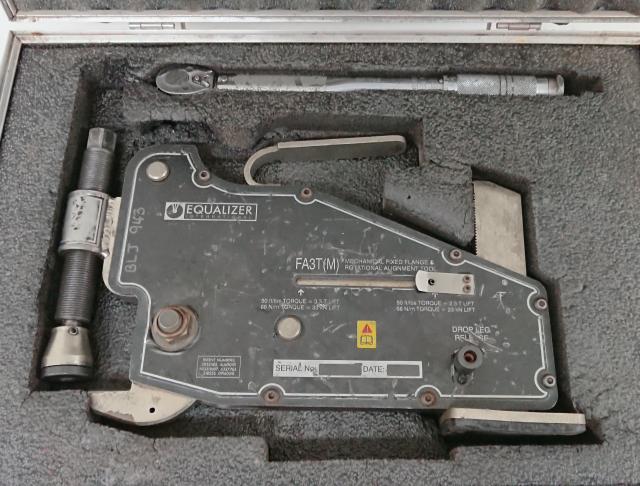
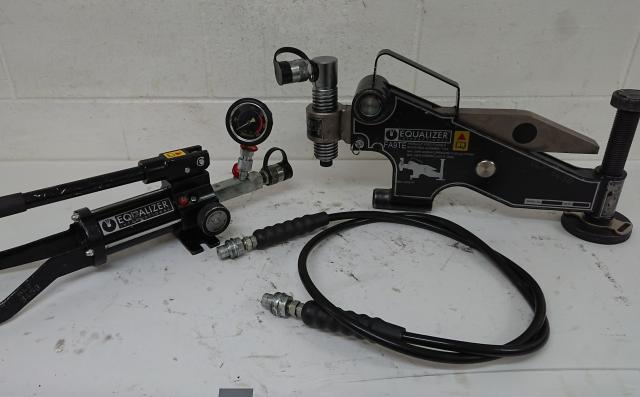
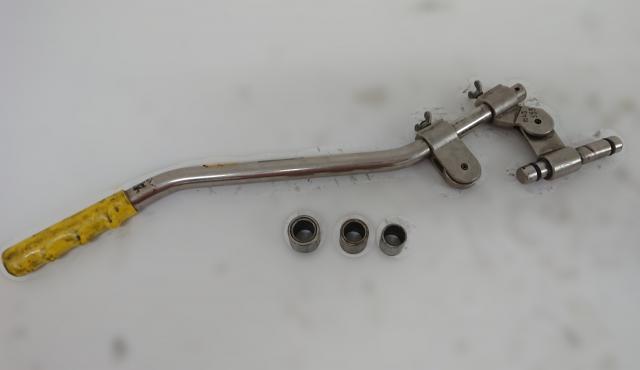
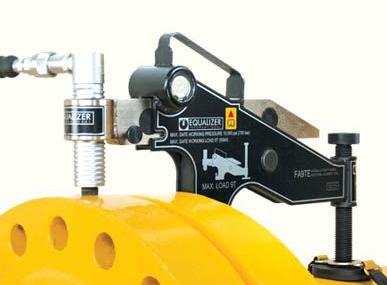
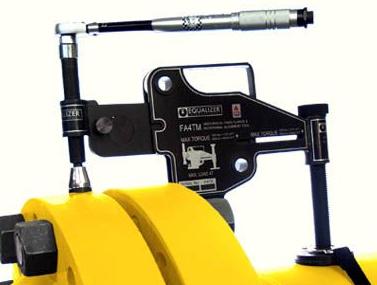
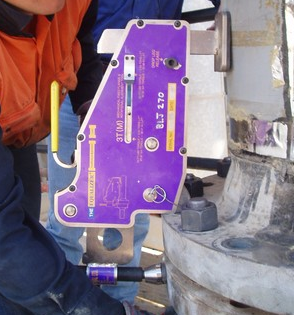
Variety of Mechanical, Hydraulic & Hand-held Flange Aligners available.
Flange Alignment tools can be used to align or re-align flange joints during pipework construction, commissioning or during routine maintenance. Usually tool is attached to the flange joint where misalignment is at its greatest and then used to push and pull the flanges into correct alignment. Flange alignment tools are developed to rectify twist and rotational misalignment without additional stress in pipelines. Hydraulic cylinders, jacks and lifting wedges can also be used to assist in positioning and aligning.
Flange Alignment tools available for hire from 125kg, 3.3T, 4T, 6T & 9T.
Download Data Sheet ~ Flange Aligners

Air driven pumps mounted in a compact tubular steel carrying frame capable of 1500 bar operating pressures, used in conjunction with BLJ In-situ Solutions Bolt tensioning tools and equipment. All tensioner equipment comes fitted with CEJN Quick connect fittings, using AW 46 oil, inspected regularly and calibrated to Australian Standards meeting all safety requirements.

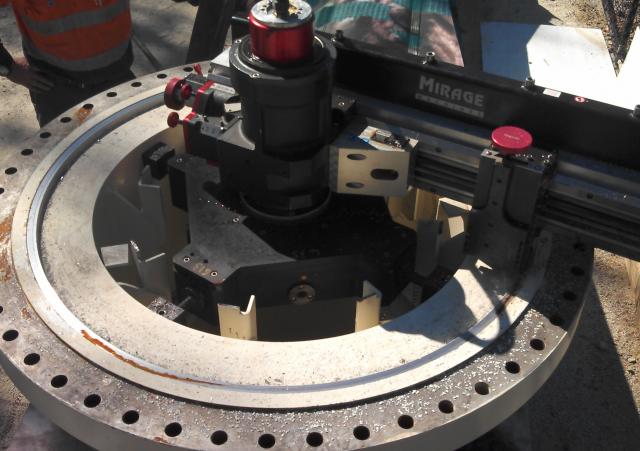
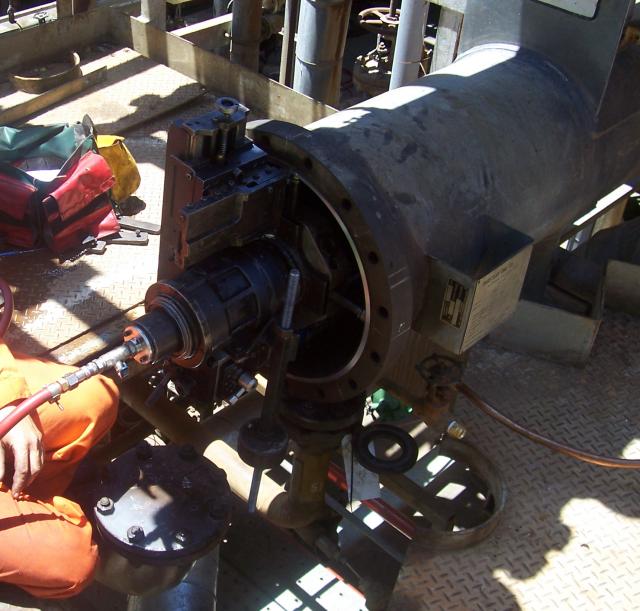
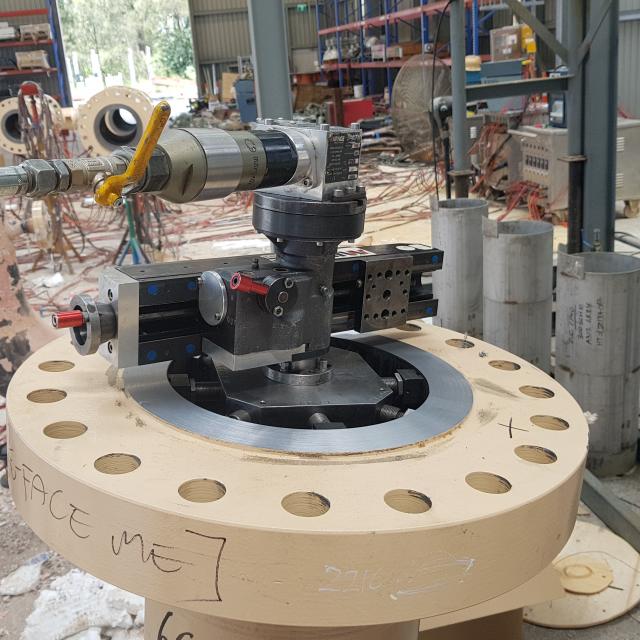
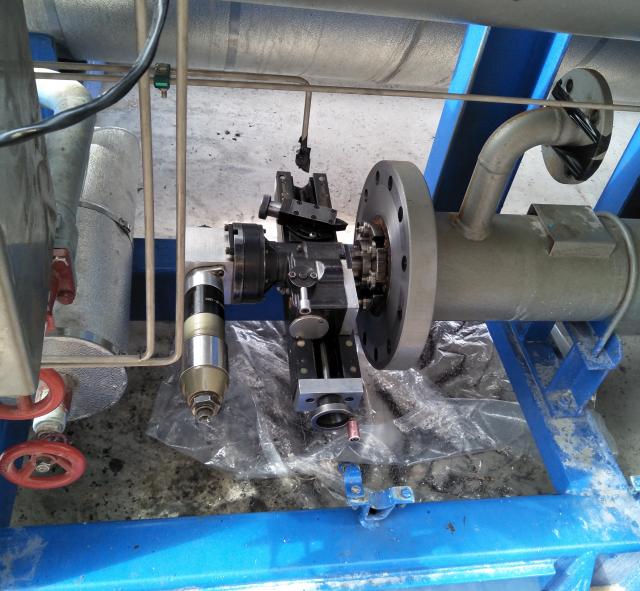
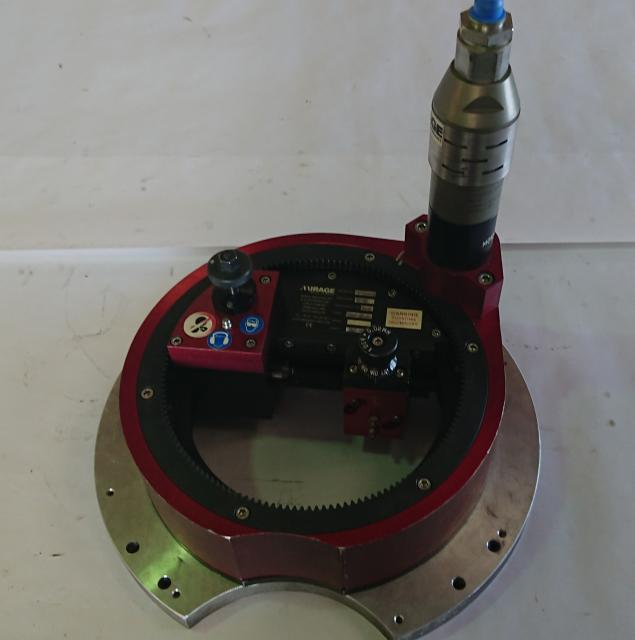
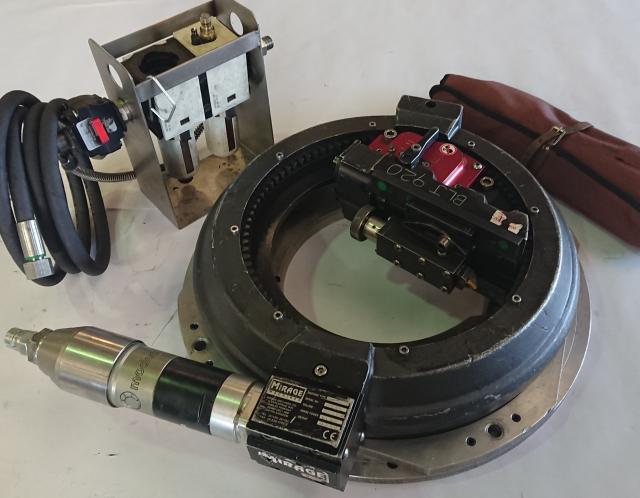
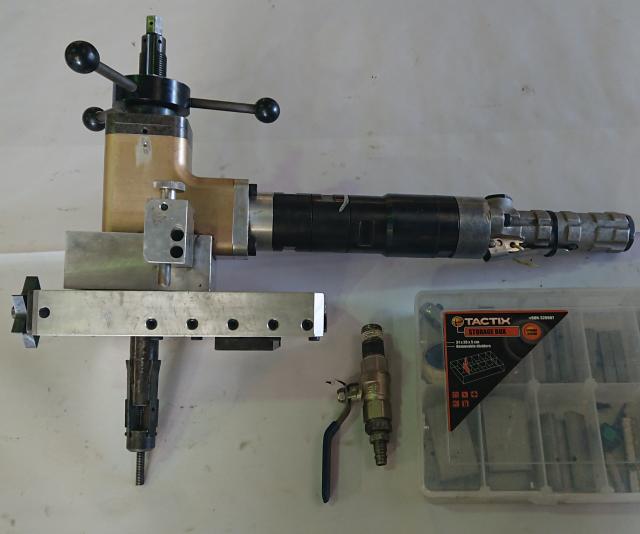
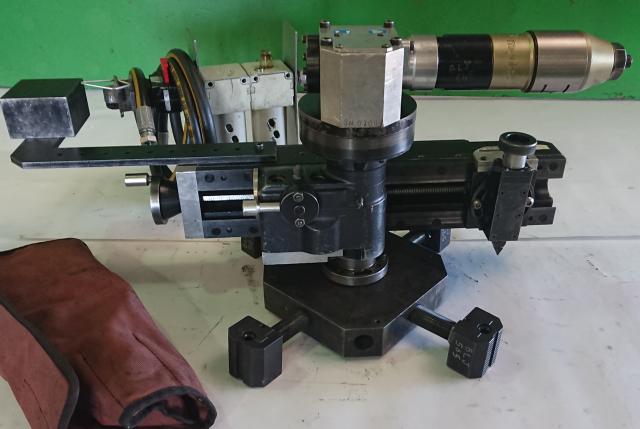
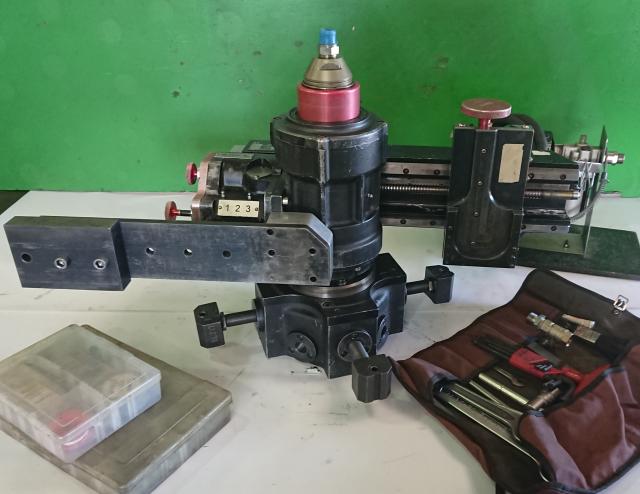
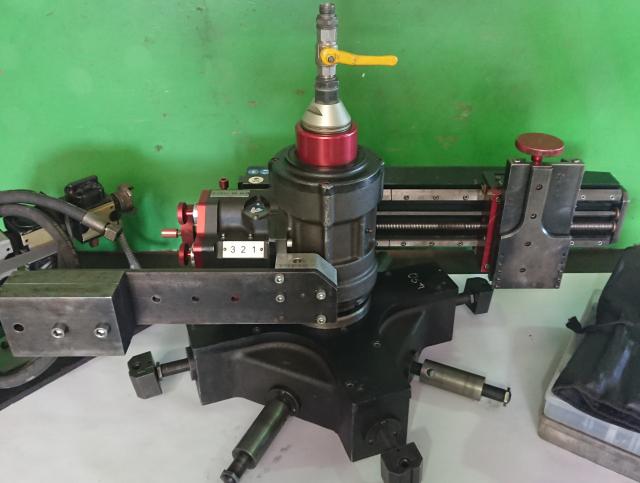
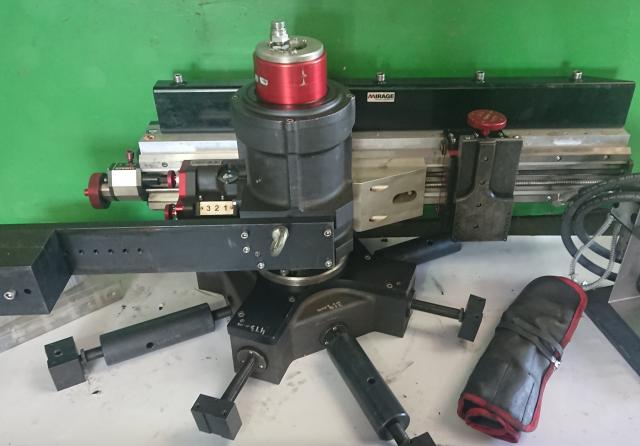
Flange facing is the process of machining the contact surfaces of flanges to create smooth and flat mating surfaces. It removes corrosion, scoring, pitting and distortion from the flange face so the joint seals correctly once it is bolted back together. A flange facing machine is the portable tool that does that work with the flange still in place.
Taking your field equipment to the machine shop is not always feasible. This is why BLJ In-situ Solutions offers its range of on-site machining services. Our air driven portable flange facing machines handle flange sizes from 0 to 1.8 metres in diameter and carry out machine shop operations without removing the plant item, consistently achieving tolerances and finishes once thought to be achievable only in an engineering workshop.
We bring the workshop to you and work in-situ, saving time and money. Whatever the work environment or situation, BLJ In-situ Solutions can offer a machining solution to meet your required application.
Our flange facing equipment fleet covers flange sizes from 0 inches through to 72 inches. Each machine is supplied with the tooling and equipment required to set up and operate.
| Machine | Facing range | Mounting | Data sheet |
|---|---|---|---|
| MM200e Flange Facer | 0″ to 8″ (0 to 203mm) | Internal mount | MM200e specs (PDF) |
| MM300e Flange Facer | 0″ to 12″ (0 to 305mm) | Internal mount | MM300e specs (PDF) |
| FF1200 Flange Facer | 0″ to 12″ (0 to 305mm) | External (OD) mount | FF1200 specs (PDF) |
| 203B-FF Flange Facer | 1.5″ to 12″ (38 to 305mm) | Internal mount | 203B-FF specs (PDF) |
| MM610i Flange Facer | 2″ to 24″ (50 to 610mm) | Internal mount | MM610i specs (PDF) |
| AX321 Flange Facer | 3″ to 21″ (76 to 533mm) | External (OD) mount | AX321 specs (PDF) |
| MM860i Flange Facer | 6″ to 34″ (152 to 864mm) | Internal mount | MM860i specs (PDF) |
| MM1000i Flange Facer | 6″ to 40″ (152 to 1016mm) | Internal mount | MM1000i specs (PDF) |
| MM1500i Flange Facer | 12″ to 60″ (305 to 1524mm) | Internal mount | MM1500i specs (PDF) |
| AX1445 Flange Facer | 14″ to 45″ (356 to 1143mm) | External (OD) mount | AX1445 specs (PDF) |
| SX2872 Flange Facer | 28″ to 72″ (711 to 1829mm) | External (OD) mount | SX2872 specs (PDF) |
Flange facing machines mount one of two ways, and the right choice depends on what the flange is attached to and how much room there is around it.
Where a job is not clear cut, our technicians will confirm the mounting arrangement before mobilising so the correct machine arrives on site the first time.
Flange facing is usually one part of a wider scope. It sits alongside flange joint management and controlled bolting and bolt tensioning, because a correctly machined face still needs accurate bolt load to seal. Our approach to the full scope is set out on our flange maintenance and flange joint integrity page.
You can hire a flange facing machine from our fleet and run it with your own people, or we can supply the machine with a BLJ technician who carries out the work. Many clients use the second option during a shutdown, when the window is tight and the joint has to seal first time.
What is included with a hire: the machine, the mounting hardware and the standard tooling required to set up and operate it, all maintained and tested before it leaves our workshop. Every item in the fleet is registered in our equipment management system so we can confirm availability and location at any time.
What you need to provide: the air supply to drive the machine, safe access to the flange, and confirmation that the system is isolated and the joint is clear for work. Our team will talk this through with you before delivery so nothing holds the job up on the day.
Machines are dispatched from our workshops in Brisbane and Gladstone, Queensland, and we mobilise to sites across Australia including Brisbane and Lytton, Gladstone, Chinchilla, Karratha, Perth, Darwin, Newcastle and the Hunter Valley and Sydney. The full range is on our on-site machining equipment hire page.
Flange facing means machining the sealing surface of a flange back to a flat, smooth and correctly finished condition. Over time a flange face is damaged by corrosion, gasket bonding, scoring and heat distortion, and once the surface is out of specification the joint will not seal reliably no matter how it is bolted. Flange facing restores that surface so the gasket seats properly.
A flange facing machine is a portable machine tool that clamps to a flange, either inside the bore or on the outside diameter, and rotates a cutting tool across the flange face. It performs the same work as a lathe in an engineering workshop, but it is taken to the component rather than the component being taken to it. BLJ In-situ Solutions holds a hire fleet covering 0 to 72 inches.
The three most common in industrial pipework are raised face (RF), where the gasket seats on a raised portion of the flange; flat face (FF), where the full face is machined flat and the gasket covers the whole surface; and ring type joint (RTJ), where a metal ring sits in a machined groove and is used on higher pressure and higher temperature duty. Each has a different specified surface finish, and our machines cut all three.
Our fleet covers 0 inches to 72 inches, which is 0 to approximately 1.8 metres in diameter. Smaller flanges are handled by our internal mount machines such as the MM200e and MM300e, while large diameter work such as vessel and exchanger faces is handled by external mount machines including the AX1445 and SX2872.
Yes. Flange facing machines are available for dry hire with the tooling required to set up and operate them. If your team is not set up to run the machine, or the joint is critical and the shutdown window is tight, we can supply a BLJ technician with the machine instead.
It depends on the diameter, the finish specified and how much material has to come off, but the more useful comparison is against the alternative. Removing a flange or component and sending it to a workshop adds disassembly, transport, machining, return transport and reassembly. Machining it in place removes all of that, which is why in-situ flange facing is usually the faster and more cost-effective option.
BLJ In-situ Solutions operates from workshops in Brisbane and Gladstone, Queensland, and mobilises nationally. We regularly work across Queensland, New South Wales, Western Australia, South Australia, Victoria and the Northern Territory, including remote and regional sites, for clients in energy, LNG, oil and gas, utilities, petrochemical, mining, construction and infrastructure.

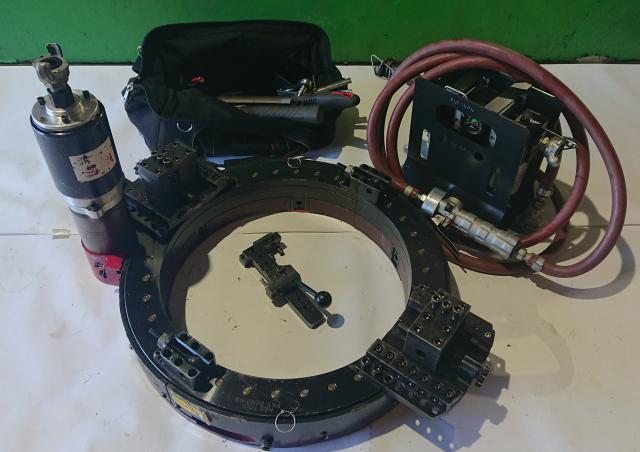
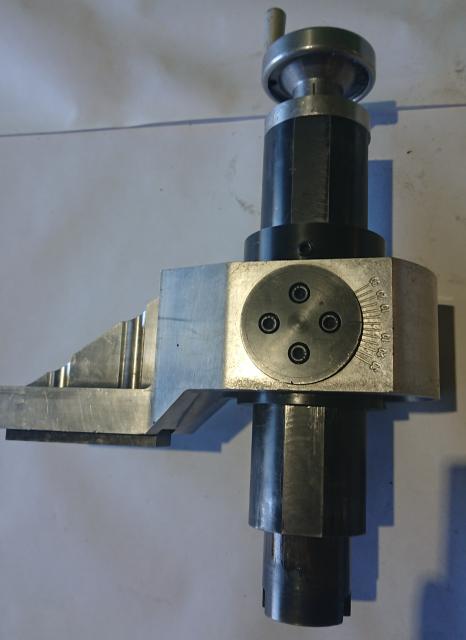
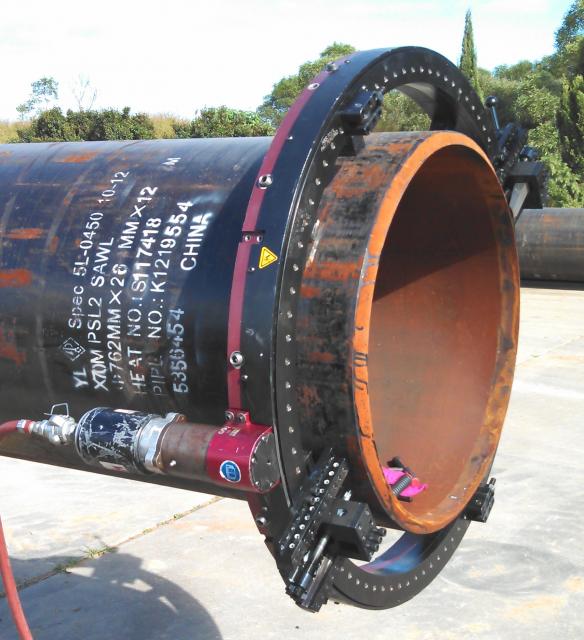
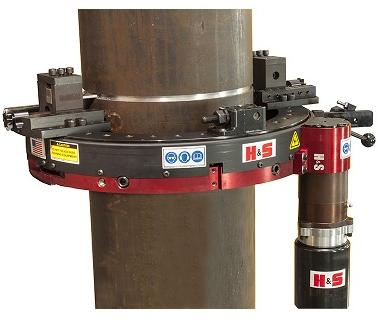
Pipe cutting and weld prep machines, also known as split frame clamshells, cut and bevel pipe in place without heat, flame or sparks. They clamp around the pipe, rotate a cutting tool around it and machine a square cut and a weld ready bevel in the same pass. BLJ In-situ Solutions holds a hire fleet covering 4 inch to 60 inch diameter pipe.
Because the cut is mechanical rather than thermal, there is no heat affected zone. The pipe is not distorted, the material properties either side of the cut are unchanged, and the work can be carried out in atmospheres where an open flame would not be permitted. That is why cold cutting is standard practice on live plant, in hazardous areas and on any line where the weld has to pass inspection first time.
The frame is split, so it opens and closes around pipe that is already installed. There is no need to break the line apart to get the machine on. Once clamped, the tool bits feed automatically into the work piece with each rotation of the clamshell, which produces a consistent and precise finish rather than one that depends on operator feel.
These are portable pipe lathes. They simultaneously sever and bevel inline pipe, and they can form an angle bevel as they cut, so a single set up delivers a cut face that is ready for weld preparation. A swivel counter boring head attachment is also available for hire where the internal diameter needs to be machined to suit the weld procedure.
The range covers small bore pipework right through to large diameter vessels, so a single supplier can handle a mixed scope across a plant.
Pipe cutting is often one element of a larger scope. It runs alongside our on-site machining services and is frequently mobilised as part of a shutdown or turnaround, where a tie-in has to be cut, prepped, welded and returned to service inside a fixed window. Where the same outage also involves flange work, our flange joint management and controlled bolting teams work the scope together.
You can hire a pipe cutting and weld prep machine and run it with your own crew, or we can supply the machine with a BLJ technician who carries out the cut. Clients often take the second option when the bevel has to meet a specific weld procedure, or when the line is live and the job carries no margin for a second attempt.
What you need to provide: the air supply, safe access around the full circumference of the pipe, and confirmation that the line is isolated, drained and safe to cut. Clearance around the pipe matters more than people expect, because the clamshell rotates around the outside of it. Our team will check this with you before delivery.
Machines are dispatched from our workshops in Brisbane and Gladstone, Queensland, and we mobilise to sites across Australia including Brisbane and Lytton, Gladstone, Karratha, Perth, Newcastle and the Hunter Valley and Sydney. The rest of the fleet is on our on-site machining equipment hire page.
Cold cutting is cutting metal without heat, flame or sparks. Instead of burning through the material, a mechanical cutting tool removes it. This avoids a heat affected zone, so the material either side of the cut keeps its original properties and the pipe does not distort. It also removes the ignition risk, which is what makes it suitable for work on live plant and in hazardous areas.
A split frame clamshell is a portable pipe lathe whose frame splits in two so it can be fitted around pipe that is already installed. Once closed and clamped, the frame rotates around the pipe carrying the cutting tools with it. It is the standard machine for cutting and bevelling in-line pipe without dismantling the run.
For a standard single V butt weld preparation the included angle is commonly 37.5 degrees, though the correct figure for any given job comes from the applicable weld procedure specification rather than a general rule. Wall thickness, material and the welding process all affect the preparation required. Our machines cut to the angle and root face your procedure calls for.
Our fleet covers 4 inch to 60 inch diameter pipe, which is approximately 100mm to 1,525mm. That range takes in most process pipework as well as large diameter vessel and header work.
Removing a section of pipe to cut it elsewhere means disassembly, transport, machining, return transport and reassembly, and every one of those steps carries time, cost and the risk of introducing a new problem. Cutting in place removes all of it. We bring the workshop to you and work in-situ, saving time and money.
Yes, and that is where most of this work happens. Cold cutting suits a shutdown because it needs no hot work permit, produces no sparks near other trades and delivers a weld ready face straight off the machine, which keeps the welding crew moving. BLJ In-situ Solutions mobilises pipe cutting alongside our other on-site machining disciplines as part of a single shutdown scope.
BLJ In-situ Solutions operates from workshops in Brisbane and Gladstone, Queensland, and mobilises to sites across Australia, including remote and regional locations. We work for clients in energy, LNG, oil and gas, utilities, petrochemical, mining, construction and infrastructure.

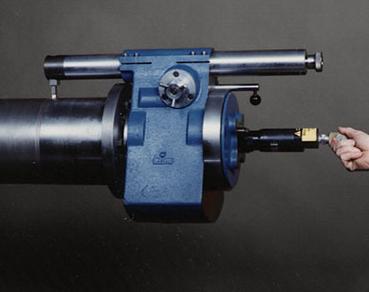
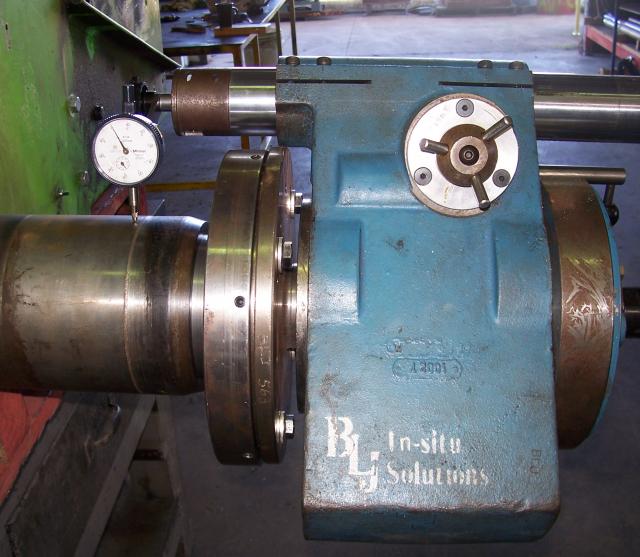
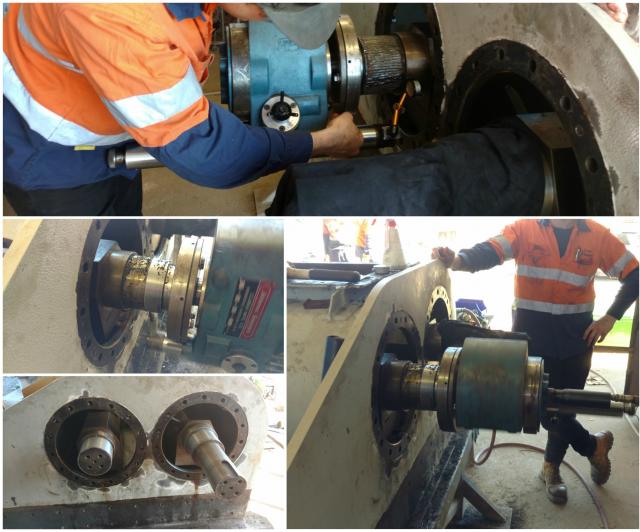
Journal turning is machining the outside diameter of a shaft to bring it back within specification for concentricity, surface finish and circularity. BLJ In-situ Solutions’ portable journal turning lathe does this in place. It bolts directly to the end of the shaft and rotates around it, so the shaft does not have to be removed and sent to a workshop.
Our journal turning lathe re-turns shafts and roll journals from 4 inch to 11.25 inch (101.6mm to 285.8mm) diameter. It is pneumatically driven and supplied with the tooling and equipment required to set up and operate.
A portable journal turning lathe mounts on the end of the shaft and turns its cutting tool around the journal, instead of spinning the shaft in a conventional lathe. That is what lets a large shaft be machined without lifting it out of the plant.
Because the machine references the shaft itself, the journal is machined about the axis it actually runs on.
| Specification | Metric | Imperial |
|---|---|---|
| Shaft diameter | 101.6mm to 285.8mm | 4″ to 11.25″ |
| Turning reach (from spindle face) | 406.4mm | 16″ |
| Turning reach (with optional extension) | 558.8mm | 22″ |
| Minimum swing clearance (radius) | 212.7mm | 8.37″ |
| Turning bar diameter | 58.7mm | 2.31″ |
| Feed rate (per revolution) | 0.076mm to 0.279mm | 0.003″ to 0.011″ |
| Drive | Pneumatic | |
| Supply pressure | 6 bar | 90 psi |
| Air consumption | 0.85 m3/min | 30 CFM |
| Operational weight | 90.7kg | 200 lbs |
| Overall length (extended) | 1193.8mm | 47″ |
| Overall length (retracted) | 787.4mm | 31″ |
Download the journal turning lathe data sheet (PDF)
Four things decide whether the lathe can do the job on site. Checking them before mobilising is what stops a wasted trip.
Send us the shaft diameter, the journal position and a photo of the access around the shaft end, and we will confirm the fit before hire.
Shaft journals are the load-bearing surfaces that carry bearings, pulleys and couplings. When they wear, the result is vibration, poor fitment and faster wear on everything connected to them. A journal turning lathe is used for:
It is common on crushing and screening equipment, pumps and rotating process equipment, and marine vessels. BLJ’s recent work includes restoring both 175mm journals on a mobile crusher shaft for a Brisbane client, and journal turning on a dredging vessel for a dredging company in South Queensland.
Whether machining is cheaper than a new shaft depends on wear depth, lead time and downtime, and the trade-off between repair and replacement is usually decided on those three. Where a keyway on the same shaft has also worn, it can be recut with our portable keyway milling machines in the same visit.
You can hire the journal turning lathe from BLJ In-situ Solutions and run it with your own people, or we can supply it with a BLJ technician who carries out the work as part of our journal turning services.
What is included with a hire: the lathe and the tooling and equipment required to set it up and operate it.
What you need to provide: compressed air at 6 bar and 30 CFM, access to the shaft end with the gear or bearing removed, the clearances listed above, and confirmation that the equipment is isolated and safe to work on.
Journal turning is one part of BLJ’s wider on-site machining and mechanical maintenance work. Brisbane operators can build onsite journal turning into their planned maintenance programs, and unplanned shaft failures are handled through our emergency and unplanned onsite machining services.
We support sites across Australia from our workshops in Brisbane and Gladstone.
BLJ In-situ Solutions is certified and registered by TQCS International Pty Ltd to ISO 9001:2015 Quality Management Systems standard. All work undertaken by our technicians is executed in accordance with its Quality Management System processes.
BLJ In-situ Solutions’ portable journal turning lathe machines shafts from 4 inch to 11.25 inch (101.6mm to 285.8mm) diameter. It reaches 16 inch (406.4mm) along the shaft from the spindle face, or 22 inch (558.8mm) with the optional extension.
Yes. BLJ’s journal turning lathe bolts to the end of the shaft and rotates around it, so the shaft stays where it is. Only the gear or bearing needs to come off to expose the shaft end, and adjusting screws centre the lathe even when the end face is no longer square.
BLJ’s journal turning lathe is pneumatically driven and needs a compressed air supply of 6 bar (90 psi) delivering 0.85 cubic metres per minute (30 CFM). Check that the site compressor can deliver this before the lathe is mobilised.
BLJ’s journal turning lathe needs a minimum swing clearance of 212.7mm (8.37 inch) radius around the shaft centreline, and around 787.4mm (31 inch) of clear length off the shaft end with the turning bar retracted. Send BLJ the shaft details and a photo of the access and we will confirm the fit before hire.
Journal turning brings a worn shaft journal back within specification for concentricity, surface finish and circularity, so bearings, pulleys and couplings fit and run correctly again. BLJ’s lathe feeds at 0.076mm to 0.279mm per revolution, and the final finish depends on the feed selected and the shaft material.
Yes. BLJ In-situ Solutions hires the journal turning lathe with the tooling required to set it up and operate it, for your own team to run. We can also supply it with a BLJ technician who carries out the machining.
BLJ In-situ Solutions provides journal turning and journal turning lathe hire across Australia from our workshops in Brisbane and Gladstone. We support sites in regions including Chinchilla, Karratha, Darwin, Perth, Newcastle, Adelaide and Geelong.

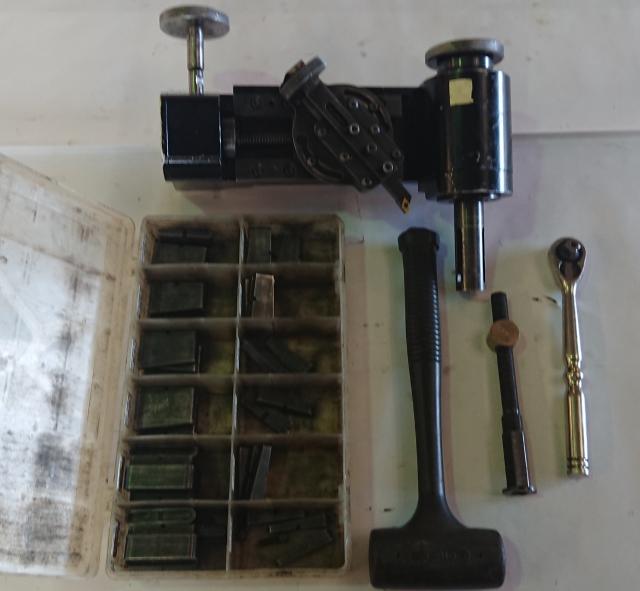
The QuickFace is a compact, manually operated flange facer built for small bore work. At 6.8kg it is the lightest machine in the BLJ In-situ Solutions flange facing fleet, and it needs no air or power supply to run, which makes it the practical choice in confined spaces, at height, and anywhere a compressor cannot reasonably be dragged.
Flange facing is the machining of a flange’s sealing surface to bring it back to flat and true, removing corrosion, scoring, pitting and gasket damage so the joint seals correctly once it is bolted up. The QuickFace does that work on flanges from 0.96 inch through to 12 inch, mounting inside the bore and machining outwards.
Like every machine in our fleet, it is supplied with the tooling and equipment required to set up and operate.
Download Data Sheet ~ QuickFace
| Specification | Metric | Imperial |
|---|---|---|
| Clamping diameter (ID) | 24.4mm to 157.7mm | 0.96″ to 6.21″ |
| Facing diameter | 24.4mm to 304.8mm | 0.96″ to 12″ |
| Swing diameter | 508mm | 20″ |
| Tool post slide travel | 71.1mm | 2.8″ |
| Tool post depth travel | 27mm | 1.06″ |
| Tool post swivel | 0 to 40 degrees | |
| Feed screw (coarse) | 11 TPI | 125 to 250 microinch |
| Feed screw (fine) | 20 TPI | 60 to 100 microinch |
| Machine weight | 6.8kg | 15 lbs |
Two feed screws, two finishes. The coarse screw covers the surface finish band normally specified for raised face gasket seating. The fine screw produces a smoother finish where the joint or the specification calls for one. The tool post also swivels through 40 degrees, so the machine can cut a chamfer or a taper as well as a flat face.
Download the QuickFace data sheet (PDF)
The QuickFace is the hand-driven, small bore option. It is not a replacement for the air driven machines, it is what you reach for when those machines are more than the job needs or physically will not fit.
| QuickFace | Air driven fleet | |
|---|---|---|
| Drive | Manual | Air |
| Weight | 6.8kg | Heavier, machine dependent |
| Facing range | 0.96″ to 12″ | 0″ to 72″ |
| Best for | Small bore, confined access, no air available | Larger flanges, higher volume, faster cycles |
For anything above 12 inch, or where a job runs to a high number of faces, see the full range of flange facing machines available for hire, which covers flange sizes from 0 to 72 inch across eleven models.
A machined face is only half of a sealed joint. The bolt load has to be right as well, which is why flange facing usually sits alongside flange joint management and controlled bolting and bolt tensioning on the same scope.
Air driven machines are faster and they carry the heavier scopes. But an air driven machine needs a compressor, a hose run and somewhere safe to put both, and on a lot of small jobs that is the hardest part of the setup.
The QuickFace removes all of that. One technician can carry it, mount it and cut the face with nothing but the machine itself, which is why it is often the machine that gets a small leaking joint fixed the same day rather than the next shutdown.
You can hire the QuickFace from our fleet and run it with your own people, or we can supply it with a BLJ technician who carries out the work.
What is included with a hire: the machine, the mounting hardware and the standard tooling required to set up and operate it, all maintained and tested before it leaves our workshop.
What you need to provide: safe access to the flange, and confirmation that the system is isolated and the joint is clear for work.
It mounts in bores from 0.96 inch to 6.21 inch and faces flange diameters from 0.96 inch up to 12 inch, with a 20 inch swing.
No. It is manually operated, which is the main reason it suits confined spaces, work at height and remote locations.
Yes. The tool post swivels through 0 to 40 degrees.
The machine carries two feed screws, a coarse screw for the finish band normally specified for raised face gasket seating, and a fine screw for a smoother finish where the joint requires it.
Our flange facing machine range covers 0 to 72 inch across eleven models, internal and external mount.
Across Australia, from our workshops in Brisbane and Gladstone, including Chinchilla, Gladstone, Karratha, Darwin, Perth, Newcastle, Adelaide and Geelong.

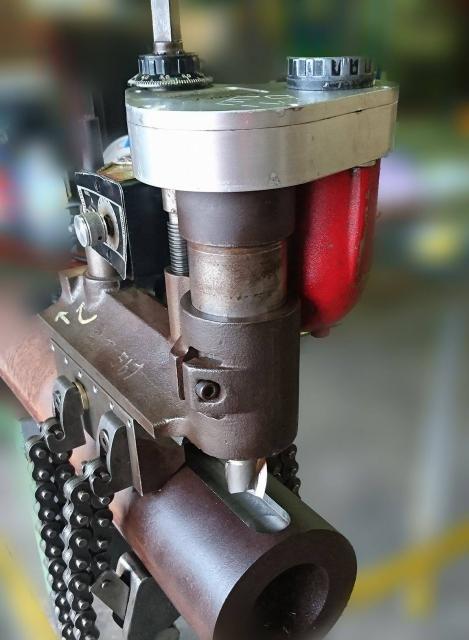
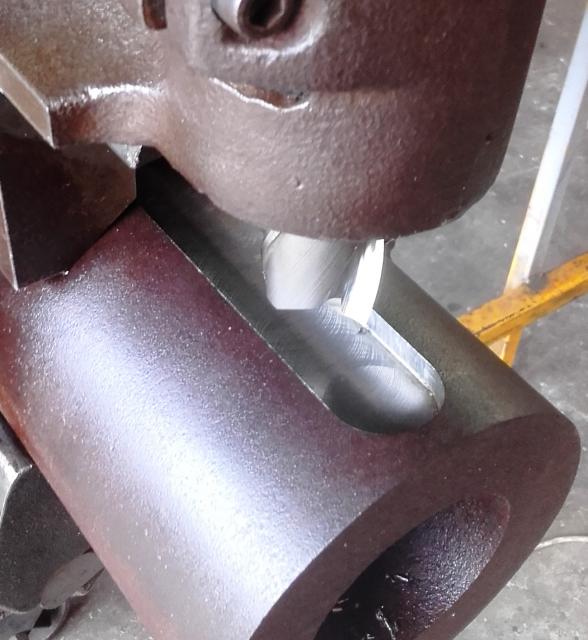
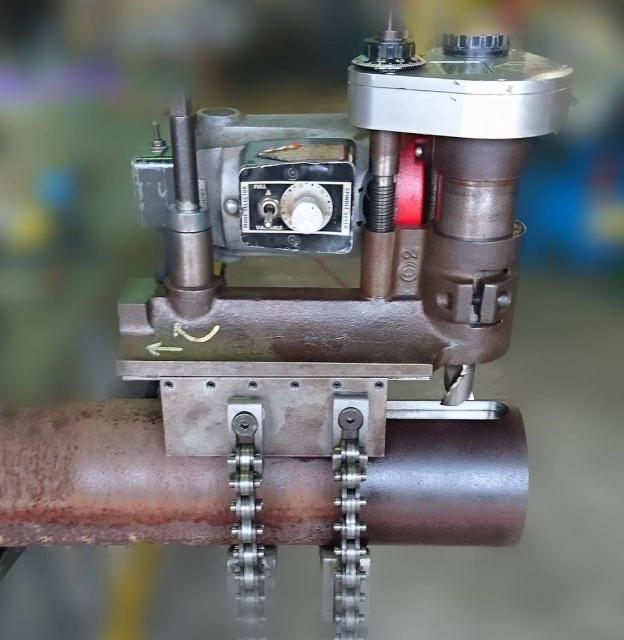
Keyway milling is the cutting of a keyway, the slot that seats a key, along the axis of a shaft or other cylindrical surface. It is used to cut a new keyway, to recut one that has worn or spread under load, or to add a second keyway to a shaft that is being repurposed.
Taking a shaft out of a machine and sending it to a workshop is not always practical. This is why BLJ In-situ Solutions offers its range of on-site machining services. Our portable keyway milling machines clamp directly to the shaft and cut the keyway where the shaft sits, so the plant item does not have to be dismantled, lifted out and freighted away.
We bring the workshop to you and work in-situ, saving time and money. Where it is more practical to send the component to us, the same work is carried out in our Brisbane and Gladstone workshops.
Our fleet covers shafts from 3/4 inch through to 24 inch outside diameter across two machines. Both are electrically driven and supplied with the tooling and equipment required to set up and operate.
KM3000 Keyway Milling Machine. For small and mid-sized shafts. Clamps directly to the shaft.
| Specification | Metric | Imperial |
|---|---|---|
| Shaft diameter | 19mm to 114.3mm | 3/4″ to 4.5″ |
| Stroke (slide travel) | 152.4mm | 6″ |
| Vertical travel (max) | 44.5mm | 1.75″ |
| Spindle hole diameter | 15.9mm | 0.625″ |
| End mill diameter (max) | 31.75mm | 1.25″ |
| Drive | 240v electric | |
| Operational weight with speed controller | 31.8kg | 70 lbs |
| Overall length | 317.5mm | 12.5″ |
| Overall width | 167.6mm | 6.6″ |
| Overall height | 295.4mm | 11.63″ |
| Base size | 111.3mm x 175.1mm | 4.38″ x 6.75″ |
The standard clamp covers 1.5″ to 4.5″ (38.1mm to 114.3mm). An optional chain clamp extends this up to 10.5″ (266.7mm), and an optional shim kit takes it down to 3/4″ (19.05mm). Download the KM3000 data sheet (PDF)
KM4000 Keyway Milling Machine. For large shafts and longer keyways. Carries a side-shift (traversal) slide, so wider keyways can be cut in multiple passes without resetting the machine.
| Specification | Metric | Imperial |
|---|---|---|
| Shaft diameter (standard) | 203mm to 457.2mm | 8″ to 18″ |
| Shaft diameter (max, with chain clamp) | 609.6mm | 24″ |
| Slide travel, longitudinal | 203mm | 8″ |
| Slide travel, traversal | 50.8mm | 2″ |
| Vertical travel (max) | 76.2mm | 3″ |
| Spindle hole diameter | 15.9mm | 0.625″ |
| End mill diameter (max) | 82.55mm | 3.25″ |
| Drive | 240v electric | |
| Operational weight with speed controller | 89kg | 195 lbs |
| Overall length | 469.9mm | 18.5″ |
| Overall width | 355.6mm | 14″ |
| Overall height | 336.6mm | 13.25″ |
| Base size | 228.6mm x 470mm | 9″ x 18.5″ |
Download the KM4000 data sheet (PDF)
| Shaft outside diameter | Machine | Notes |
|---|---|---|
| 3/4″ to 1.5″ | KM3000 | Requires the optional shim kit |
| 1.5″ to 4.5″ | KM3000 | Standard clamp |
| 4.5″ to 10.5″ | KM3000 | Requires the optional chain clamp |
| 8″ to 18″ | KM4000 | Standard clamp, side-shift available |
| 18″ to 24″ | KM4000 | Requires the chain clamp |
Where a shaft sits near the edge of a range, or the keyway is wider than a single pass, our technicians will confirm the machine and clamping arrangement before mobilising so the right equipment arrives the first time.
Keyway milling is often carried out alongside other in-situ shaft work. Where a shaft journal is also worn, it can be turned back to specification with our journal turning lathe in the same visit.
A portable keyway milling machine earns its keep when the shaft is difficult or expensive to remove. Clamping the machine to the shaft in place avoids the crane time, the strip-down, the freight and the reassembly, and it usually turns a multi-day outage into a much shorter one.
Where the component is already out, or where a batch of shafts needs the same work, sending them to our Brisbane or Gladstone workshop is often the more economical route. We will tell you honestly which way suits the job.
You can hire a keyway milling machine from our fleet and run it with your own people, or we can supply the machine with a BLJ technician who carries out the work.
What is included with a hire: the machine, the clamping hardware and the standard tooling required to set up and operate it, all maintained and tested before it leaves our workshop.
What you need to provide: a 240v supply, safe access to the shaft, and confirmation that the equipment is isolated and the shaft is clear for work. Our team will talk this through before delivery so nothing holds the job up on the day.
From 3/4 inch (19mm) to 24 inch (610mm) outside diameter. The KM3000 covers 3/4 inch to 10.5 inch depending on the clamp fitted, and the KM4000 covers 8 inch to 24 inch.
Yes. Both machines are portable and clamp directly to the shaft, which is the reason they exist. The shaft stays in place and the keyway is cut in-situ.
Yes. Recutting a spread or worn keyway, and machining a new keyway at a different clock position, are both routine. Which approach suits depends on how much material is left and what the shaft drives.
The KM3000 takes an end mill up to 1.25 inch (31.75mm) and the KM4000 up to 3.25 inch (82.55mm). Wider keyways are cut in multiple passes using the KM4000’s side-shift slide.
No. Every machine is supplied with the tooling and equipment required to set it up and operate it.
Across Australia, from our workshops in Brisbane and Gladstone, including Chinchilla, Gladstone, Karratha, Darwin, Perth, Newcastle, Adelaide and Geelong.

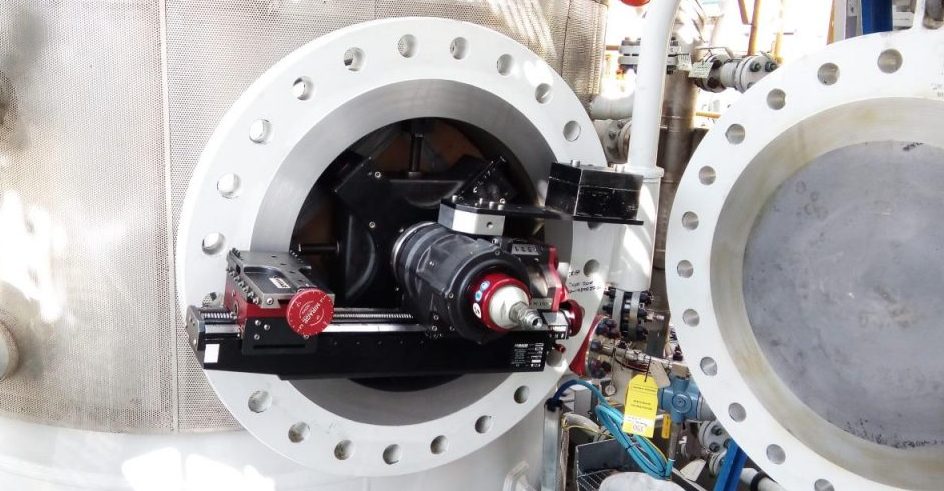
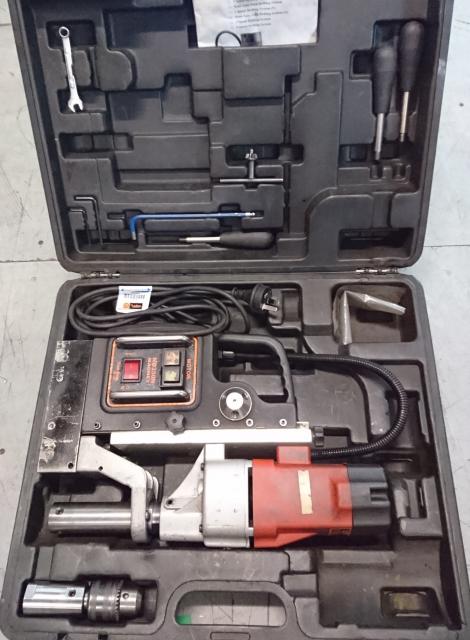
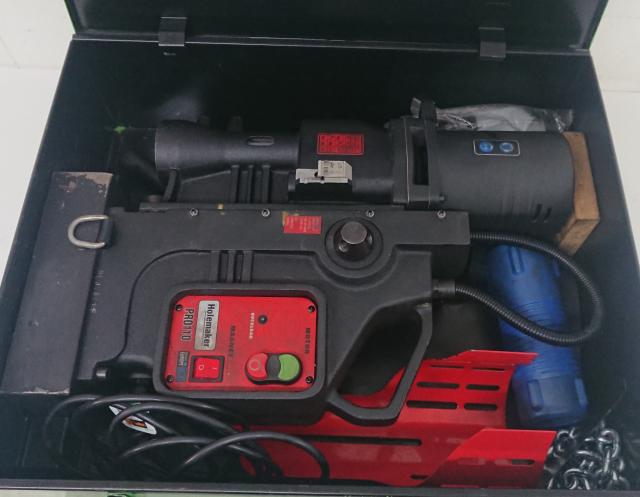
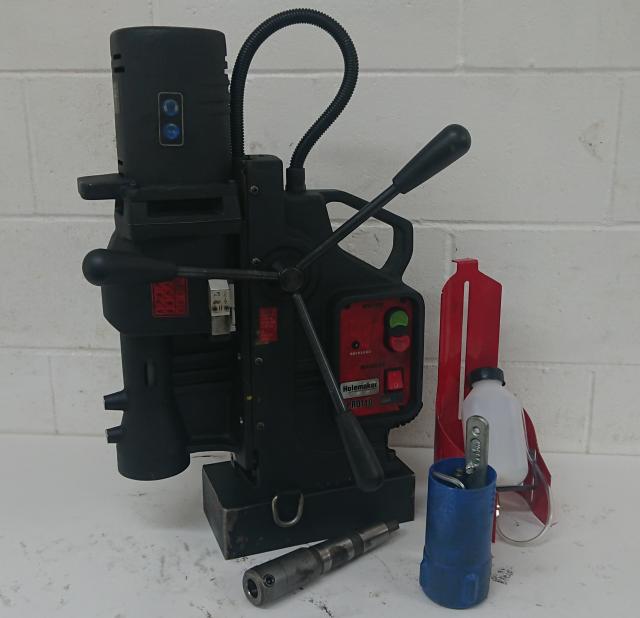
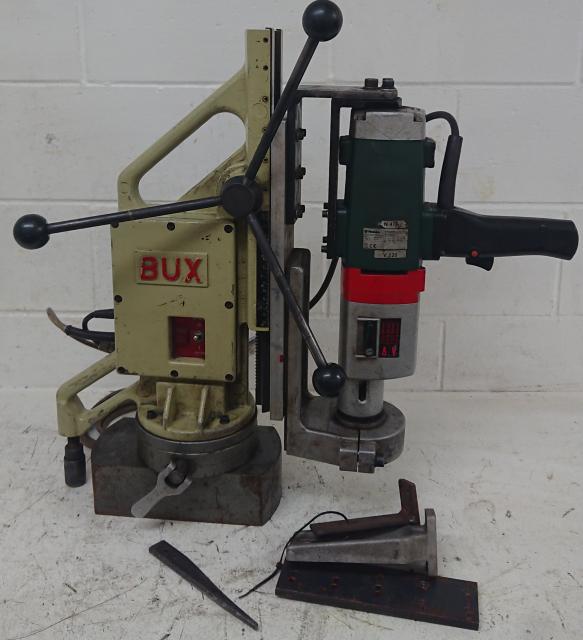
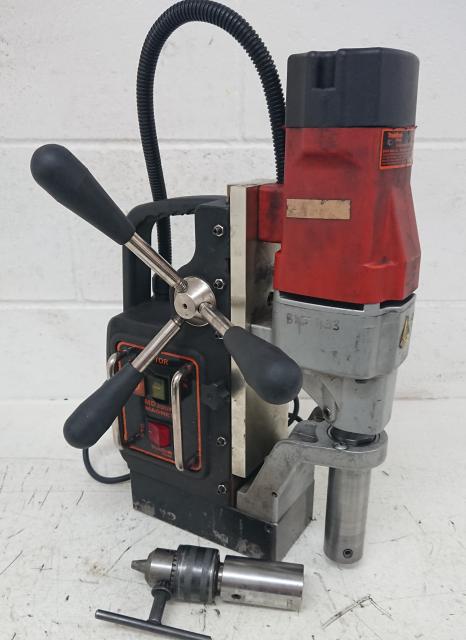
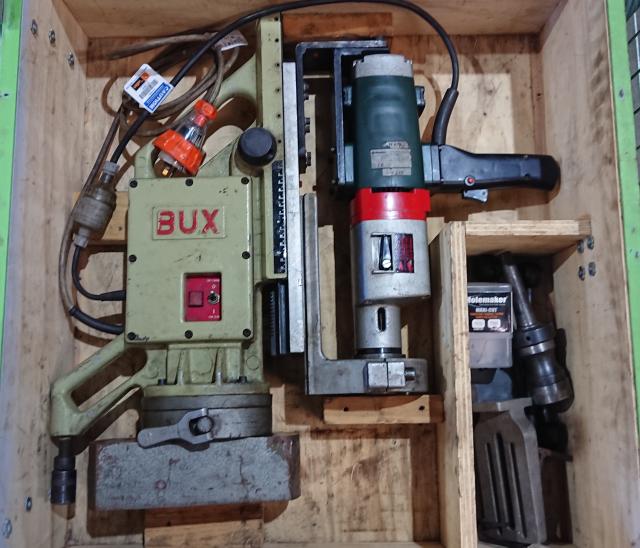
BLJ In-Situ Solutions has available a broad selection of Magnetic Base Drills which can be used with a wide variety of tooling including annular cutters, twist drills, Morse taper attachments, taps, reamers, and counter sinks all of which are also available for hire/use. All BLJ In-situ Solutions machines are supplied with tooling and equipment required to setup and operate.

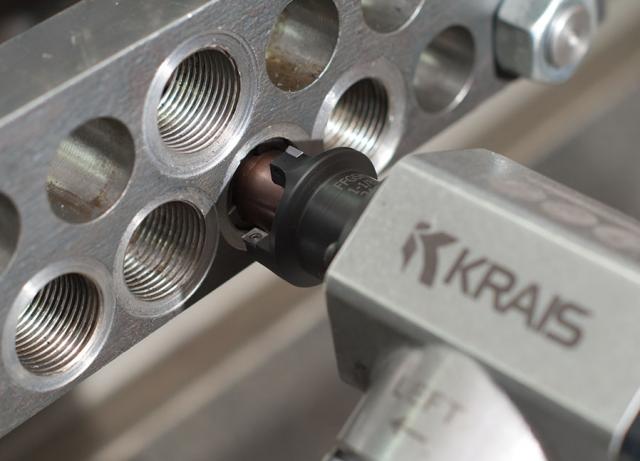
Spot Facing & Machining of Fin Fan Cooler plugs.
Pneumatic machine used for the spot facing of gasket seats on Fin Fan cooler plugs from sizes 1-1/8″ to 1-7/8″.
Equipped with a cutter head and special locking system, machine locks directly into plug thread, to suit your application.
BLJ machines come equipped with all tools required to setup and operate.
Download Data Sheet ~ Spot Facing