admin@bljiss.com.au
 07 3245 2203
 Client:
Industrial automation and process control OEM
 Location:
Brisbane, Queensland
Related Services:

Related Industries:
Project Brief
BLJ In-situ Solutions was engaged by a Brisbane based multi-disciplinary engineering and original equipment manufacturing provider, specialising in industrial automation and process control systems, to machine the nozzle flanges on a separator vessel and its associated pipework.
The vessel had been sand blasted in preparation for painting. The blasting had damaged the sealing surfaces across every flange face, leaving them unable to seal correctly once the vessel was assembled and returned to service. In total 42 raised face (RF) flanges were affected, ranging from 3/4 inch through to 8 inch.
Given the number of flanges involved, mobilising technicians and machines to the client’s site was not the most cost-effective way to handle the scope. The client shipped the vessel and pipework to BLJ’s Brisbane workshop at Capalaba instead, where the whole job could be completed in one controlled run.
Solution
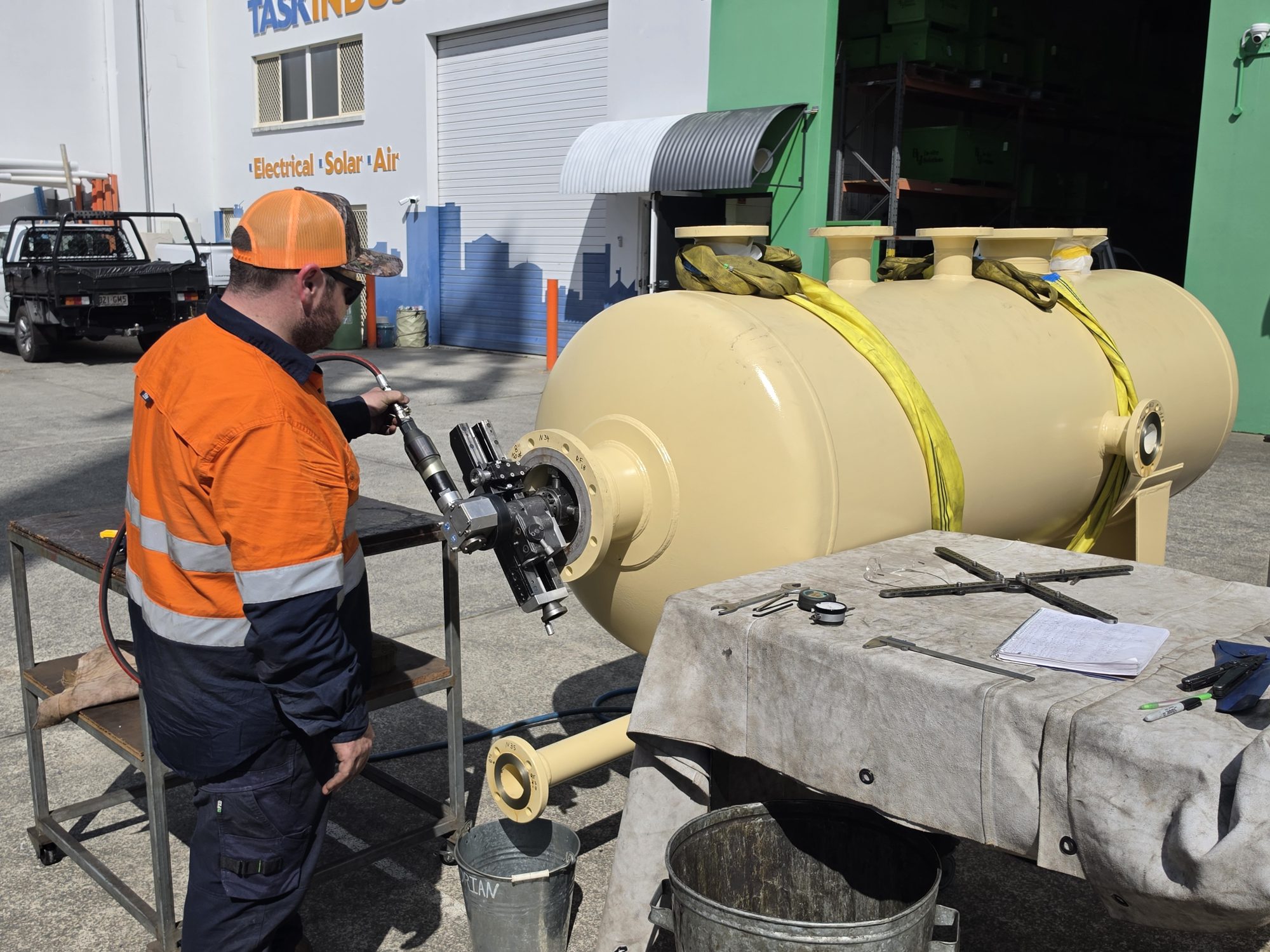
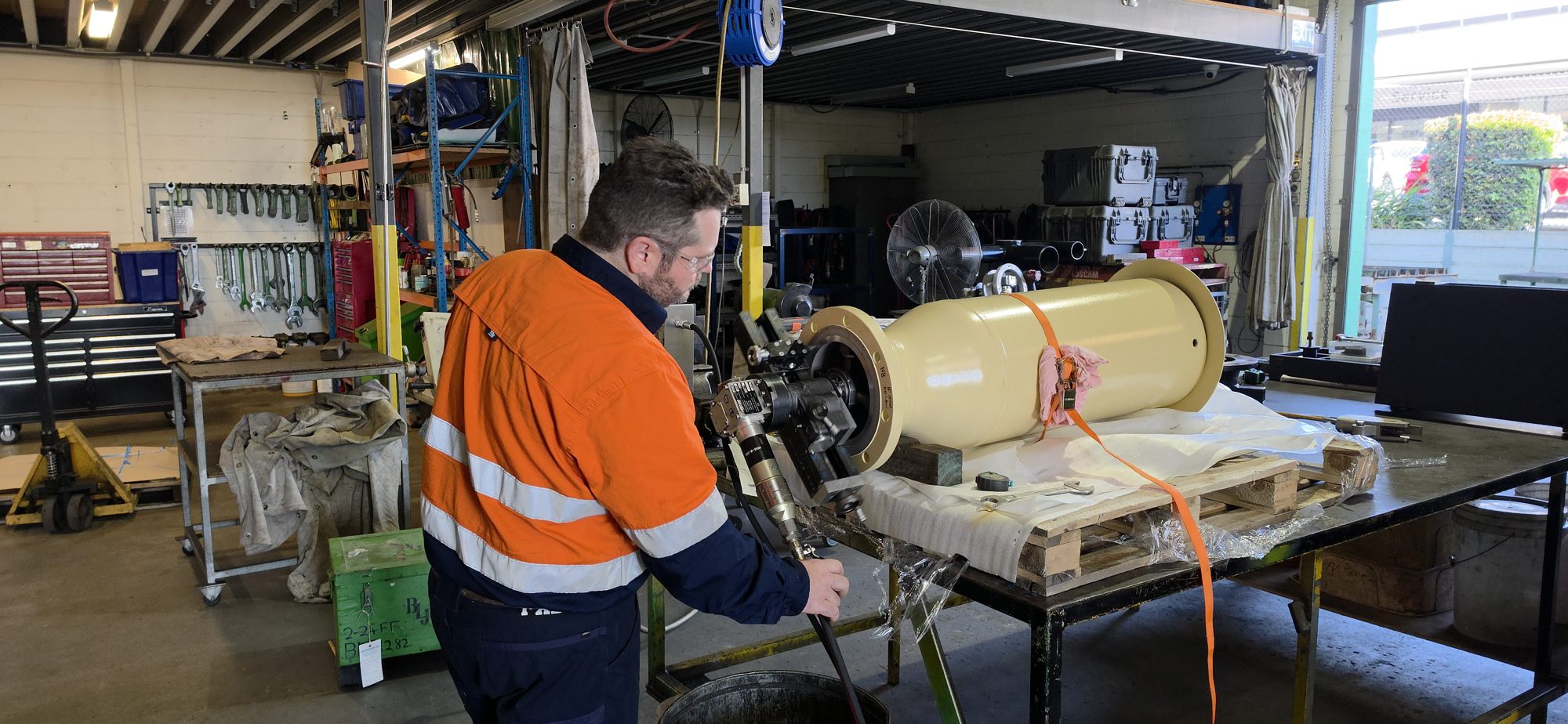
BLJ completed all machining works in-house over three days, using our Mirage MM610i and Modulathe flange facing machines.
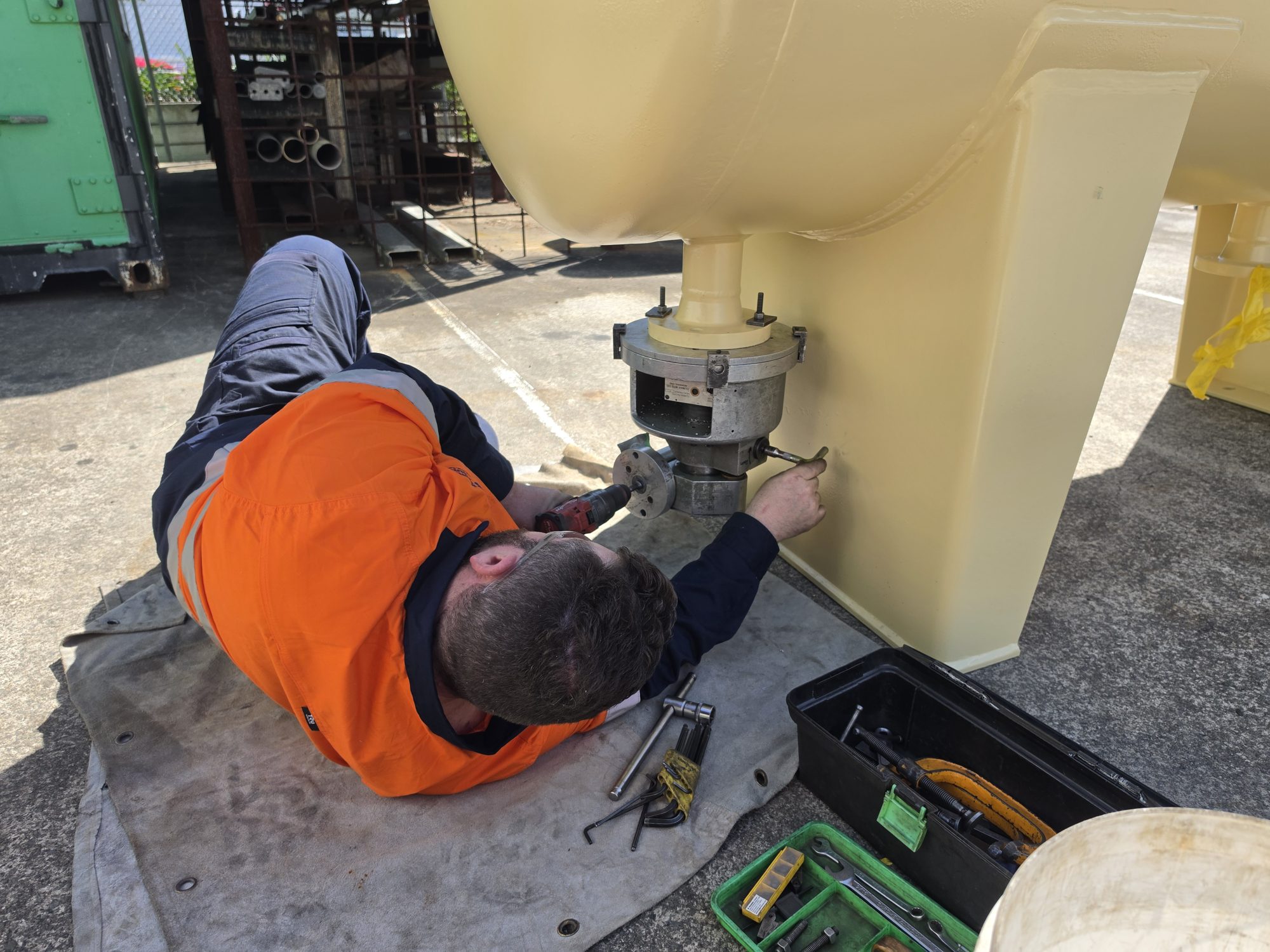
Each flange was set up, clamped and machined back to a flat, consistent sealing surface, removing the blast damage without taking more material than the joint could afford. Flange sizes changed constantly across the scope, from small bore 3/4 inch nozzles through to 8 inch faces, so machines and mounting arrangements were swapped as the team worked around the vessel.
Working in the workshop rather than on site gave the technicians clear access to every nozzle, including the small bore flanges underneath the vessel, and kept all 42 faces under the same setup and inspection routine from start to finish.
Results
All 42 RF flanges were returned to a serviceable sealing surface inside the three day window, and the vessel and pipework went back to the client ready for assembly.
No flanges needed to be replaced, which avoided the cost and lead time of new components and kept the client’s own build schedule intact. Machining the faces after blasting also meant the vessel could be painted and finished as planned, with every joint able to seal properly on start-up.
For clients with a high volume of damaged flanges in one place, sending the components to a BLJ workshop is often the more economical option. Where the plant cannot be moved, the same work is carried out in-situ using our on-site machining services.